Water loss on land adds to rising seas: global drying with gravity satellite expert Jay Famiglietti. Is this planet actually a living cooperative? Explore with science journalist Ferris Jabr. Expect abrupt shifts in big systems, from ocean currents to ice – new science led by Sjoerd Terpstra. Three interviews – let’s get busy.
Listen to or download this Radio Ecoshock show in CD Quality (57 MB) or Lo-Fi (14 MB)
THE ADVANCE OF GLOBAL DRYING
“‘Continental drying’ is having profound global impacts. Since 2002, 75% of the population lives in 101 countries that have been losing freshwater water. Furthermore, the continents now contribute more freshwater to sea level rise than the ice sheets, and drying regions now contribute more than land glaciers and ice caps.”
– Abstract from Chandanpurkar et al, July 24, 2025
We know why sea levels are rising around the world. Hotter oceans mean thermal expansion and warmer Poles dump extra water from melting glaciers. Except… now we find out there is a third source of new water into the sea, and it’s bigger than both of those. From deep underground to lakes, human actions are pushing Earth’s land water into decline. Think what that means for crops, drinking water, and all living things.
The paper published July 24 in Science Advances is titled: “Unprecedented continental drying, shrinking freshwater availability, and increasing land contributions to sea level rise”. The Lead Author is Hrishikesh Chandanpurkar, an Earth Systems scientist at Arizona State University . We reached co-author Dr. James (Jay) Familglietti. He is the former director of the Global Institute for Water Security at the University of Saskatchewan and previous Senior Water Scientist at NASA’s Jet Propulsion Lab in Pasadena.

“We find that the continents (all land excluding Greenland and Antarctica) have undergone unprecedented rates of drying and that the continental areas experiencing drying are increasing by about twice the size of the State of California each year.
The rapid expansion of dry areas has resulted in the emergence of ‘mega-drying’ regions by interlinking of previously known drying hot spots, particularly since the strongest recorded El Niño of 2014 and across the Northern Hemisphere.”
FOUR CONTINENTAL-SCALE MEGA-DRYING REGIONS
The paper says:
“A critical, major development has been the interconnection of several regional drying patterns and previously identified hot spots for TWS loss to form four continental-scale mega-drying regions, all located in the Northern Hemisphere.
These include
(i) large swaths of northern Canada and
(ii) northern Russia, where high-latitude wetting has now transitioned to drying;
(iii) the contiguous region of southwestern North America and Central America, where aridification and groundwater depletion continue or are worsening; and
(iv) the massive, tri-continental region spanning from North Africa to Europe, through the Middle East and Central Asia, to northern China and South and Southeast Asia, which owes its expansion to the recent European drought.”
OH CALIFORNIA!
Jay was last on Radio Ecoshock in 2014, revealing with some of the same satellite tools a high loss of groundwater under California. I asked if atmospheric rivers in recent years had replenished the groundwater. He said they helped, particularly to fill surface reservoirs, but did not refill water supplies underground. I’m picturing also water from ancient glaciers trapped in aquifers underground. People drill down for that clean water, but no amount of rain if going to get into those deep pools, nor would it be enough to replace what giant glaciers left over past ages. Californians will always struggle to get enough water, and in my opinion, will be struggling and retreating from water consumption from here on out.
Listen to or download this new interview with Jay Famiglietti in CD Quality or Lo-Fi
EUROPE AND UK IN THE DRYING
The study:
“In contrast to earlier findings, this study finds a recent pronounced decline in TWS across much of Europe, consistent with the recent catastrophic drought events that were found to be influenced by climate change and are among the worst in the past 2000 years. The drying now includes the British Isles and all the countries in Western and Eastern Europe.”
WHAT HAPPENED TO BALANCE?
We all heard wet places get wetter, and dry gets drier as the world warms. But we pictured some kind of balance. Analyzing satellite data from the amazing Grace satellites, this team discover land-water sources are actually decreasing. And this is not just a function of more warming by human greenhouse gases. Millions if not billions of people are hard at work consuming water pumped up out of the ground. With our mechanized pumps and endless need for water, we are mechanically part of the process. We pump it up, nature takes it away. More and more of it ends up in the oceans, becoming a major part of sea level rise.
There are many cases where climate impacts increase partly due to other human actions. For example, more people move into woodland fire zones, or build homes on the edge of a rising sea. In the case of fresh water, at least a billion people depend on pumping groundwater, especially as drought becomes more common. On the North Indian plains farmers are drilling 100 feet, 30 meters, to get water. Humans are draining water that accumulated over millennia below ground.
A TURNING POINT?
THE TEN-YEAR INFLECTION POINT – 2015
In the interview, Famiglietti adds an observation that may explain several other more recent developments. He says:
“Over the last ten years or so, and this and I keep mentioning this ten year inflection point around 2014, which was the the timing of the biggest El El Nino ever ever recorded. And right about that time then we start seeing a rapid increase in the around the world that are experiencing extreme drying more more frequent drought And sort of a complimentary impact, we see less of the world getting getting wetter.
So what we’re seeing is that the rate of drying is increasing. The area that’s experiencing drying and extreme drying is increasing at about two times the size of California each year, and that’s being compensated for by the shrinking of the areas that are that are getting wetter.
That also leads then to the on a map of the previously very distinct hotspots. And so now when you look between the hotspots, you see a lot more drying. For example, it might be in The United States, California and the Ogallala Aquifer, and they would have really popped out on a on a map before. Now if you look at that global map, you see just a mass of drying across the Southwestern US into Mexico, down into Central America, and up even into, the Northwestern US. And so that’s that’s led to what we call these mega dry. That was an effort on my part to to really try to communicate the expanse of the of the drying and how much it’s changed over the last decade.”
That 2014 and onward change period also applies to the great retraction of sea ice in Antarctica. In last week’s show, our polar sea ice expert Edward Doddridge pointed to that switch point. Where Antarctic ice had been slowly gaining in area, even as ice was lost in the Arctic, that also changed with the big El Nino in the mid-2010’s. And that is when carbon dioxide in the atmosphere also increased more – up to a third more per year – than in previous decades.
This leads to a theory of step-like progression of climate change – stimulated by extreme heat gain during major El Nino events. El Nino transfers extra heat from the ocean to the atmosphere. That pushes various other systems into overdrive. We are too close in time to those events to know if these are permanent changes or not. For now, the ten-year step up of climate is an observation that may become a theory with more bones of explanation.
MAYBE NOT SO WET IN THE BOREAL?
This new study raises another red flag. For years, scientists predicted the far north forests in Canada and Russia would get wetter as Earth heats up. But Canada and Russia are LOSING water. According to this study:
“However, as high latitudes warm at four times the global average rate, interior western Canada is now losing TWS [Terrestrial Water Storage] likely due to drying of subarctic lakes, the Canadian prairies have experienced persistent drought for the past several years, and
TWS is declining in northern Russia due to changes in precipitation and potentially due to changes in permafrost.“
Widespread but more dispersed drying is also seen across northern Europe/Scandinavia.
WHAT ABOUT THE SOUTHERN HEMISPHERE?
In the study maps, I could find no mega-drought in the Southern Hemisphere (like Patagonia, or even Australia). I asked Jay about this in the interview. Of course the scientists noticed that. They are still trying to figure it out. Before the last few decades, there was more drying in the global south than in the northern hemisphere. Now it is going the other way. Is there a large oscillation at work here? That has happened before in Earth systems, as for example when Arctic sea ice was losing ice and Antarctic gaining it. For now, we don’t know.
PEAK WATER?
Is this generation burning through water essential for life that cannot be replaced? Is this another generational issue where humans now use up the future?
Jay emphasizes since the last biggest El Nino in 2015-16, this has been a decade inflection point in the picture of world water retention. Since 2015-16, the isolated drying areas have congealed into visible patterns of “mega-drought” that stretch over continents. He describes one that starts in Southern Europe and North Africa and reaches all the way to Southeast Asia.
This reminds me of the “map of doom” I talked about in my first year of radio, in the December 22nd 2006 Radio Ecoshock show. Here is a link to that 13 minute radio piece. In later years, Lovelock withdrew his “Map of Doom” predictions for global dry belts, saying he went too far. The map was taken down.
Here is the back-story. Scientist and inventor James Lovelock, founder of the Gaia theory of interlocking life on Earth, had been visiting top British climate labs. He came away with a devastating new map of the coming world, which I called the “Climate Map of Doom”. It showed bands of desert developing around the world in the sub-tropics. Lovelock later withdrew that, saying in his dotage that he had gone too far. But now… the map of drying continents in mega-drought in this new paper suggests something similar to what Lovelock had drawn from the science of the day.
Also, as Famiglietti raises the “inflection point” starting in the period 2015-16 – that is also when the Antarctic sea ice went into a crash from which it has not yet recovered. It might be worthwhile to look for other tipping points or major changes that began around ten years ago. Certainly we know that warming and extreme weather have increased in the last ten years. This may be the global decade when the great change began.
Jay Famiglietti avoids talking about “peak water”. That is because scientists still don’t know how much ground water Earth contains. It is a bit startling, he says, that we don’t know. So there is no way to be sure we are at “peak” usage in that resource now. Of course this reminds us of the “peak oil” movement that was so strong around year 2,000 to about 2010. By that point, we realized Earth would become too hot for us, and for most other life around us, even if we burned the oil that is running out.
Plus a new use of technology changed the amount of available oil. Fracking explodes rock underground, releasing tiny bubbles of oil and gas held there. Frackable reserves have been found in many parts of the world. Who knew fossil fuel hunger would hit the level of blowing up the underground to get tiny bubbles of fuel? Although, once people started blasting the tops off mountains to get coal, we knew humans will do anything to get fossil power. Maybe it would have been better for humans if we had run out of coal, oil and gas say 50 years ago. There is still the hope that renewable energy will replace fossil power but so far that is only a too distant hope.
HOW SERIOUS?
“Recent studies estimate that up to 83% of world’s glaciers will likely melt out over the next 80 years; that the severity of drought has worsened in the past 5 years; that surface water storage in rivers, lakes, and reservoirs is in decline; and that half of the world’s major aquifers are being rapidly depleted.”
PROTECT WORLD’S GROUNDWATER for future generations!
“In many places where groundwater is being depleted, it will not be replenished on human timescales. The disappearance of groundwater from the world’s aquifers is a critical, emerging threat to humanity and presents cascading risks that are rarely incorporated in environmental policy, management, and governance. It is an intergenerational resource that is being poorly managed, if managed at all, by recent generations, at tremendous and exceptionally undervalued cost to future generations.
Protecting the world’s groundwater supply is paramount in a warming world and on continents that we now know are drying.”
This paper ends with a call to action. Perhaps with a nod to the current political climate, the team attempts to separate action to slow climate change from the problem of continental drying. Communities, states, and nations could take steps to assess critical water points, and take action to become more resilient (without mentioning climate change?)
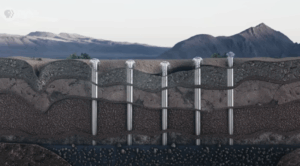
PBS VIDEO ON GRABBING GROUNDWATER – PEAK WATER
When Will The World Run Out of Water? – PBS Terra Aug 14, 2025
===================
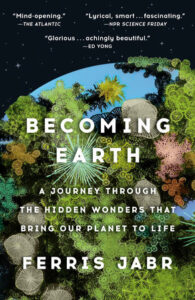
BECOMING EARTH
FERRIS JABR
Living things can be found deep down in the rock and floating high in the atmosphere. As life and this planet blend together, does a new level of being emerge? What or who is Gaia? All this is professionally explored by Ferris Jabr in his book “Becoming Earth – A Journey Through the Hidden Wonders that Bring Our Planet to Life”. Ferris publishes articles with The New Yorker, The Atlantic, Harper’s, National Geographic, and Scientific American. He received fellowships from major American Universities.
Listen to or download this interview with Ferris Jabr in CD Quality or Lo-Fi
How can anything live deep underground in the rock, never seeing sunlight or water from the clouds? A few years ago we talked with microbiologist David Thaler. He said not only do we not have any map or catalog of microscopic life – but such a project is impossible. New organisms appear in a day among billions of species. Gaia inventor James Lovelock would ask: what is the purpose of this underground life? How does it tie into the overall project of life? One obvious thought: maybe the first life traveled to Earth buried in an Asteroid. What do you think?
RETURN TO GAIA
It is time to talk about Gaia. Does that name point to a super-system, a new type of being, or what? Ferris Jabr delved into all this and explains in our interview. As Jabr explains in his YouTube conversation at the Commonwealth Club of California (link below), Gaia is an “emergent being”.
Back in 2009, I spoke with Peter Ward. He criticized the Gaia concept, publishing a counter theory called the Medea Hypothesis. The Greek Goddess Medea killed her own children – matching the many mass extinctions Ward found in the rock record. Like some other scientists, Ward would probably accept that a new overarching operating system has appeared on Earth, but not that it has any purpose.
Ward strongly rejected the idea that nature or life is fundamentally altruistic or harmonious. He emphasized that, according to evolutionary principles, all species – including humans – will exploit resources and compete ruthlessly, doing anything possible to grow and out-compete rivals. He saw the Gaia Hypothesis as wrongly attributing lifelike benevolence to the biosphere, whereas he saw only competitive, selfish dynamics.
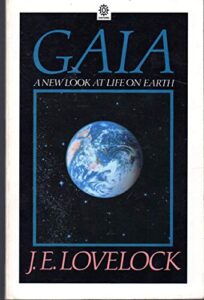
Before speaking to Ferris, I re-read my copy of James Lovelock’s original 1979 book “Gaia: A New Look at Life on Earth”. Lovelock criticizes environmentalists of the time for a focus on their own industrial societies. He suggested the real places where Earth’s environment pivots away from current life will be found in marshes and coastal shelves, as well as under-reported changes in the Tropics. Lovelock died in July 26, 2022 at age of 103. For anyone interested, I posted my summary notes on this founding Gaia book at the bottom of this blog.
Version 1.0.0
Lovelock said the chemical/molecular composition of the Troposphere is “so curious and incompatible mixture that it could not possibly have arise or persisted as chance.” Lovelock proposes “the biosphere actively maintains and controls the composition of the air to provide an optimal environment for terrestrial life.” This is one of his supports of the Gaia hypothesis.
There are many objections to the Gaia theory. It is hard to test, and as Ward said, biological feedbacks may actually amplify, not dampen, climate sensitivity. Yet In an Ecoshock interview, top UK scientist Tim Lenton explained he developed through Gaian thought. Gaian theory is an ongoing conversation.
Ferris Jabr is obviously an accomplished writer and story teller, so you might read the book just to enjoy his travels and tales of Nature. Second: Jabr is an old-school journalist. He isn’t summarizing everything you will find on the Net or AI. He travels to the tallest human-made structure in South America where samples high in the atmosphere show various life forms and organic bits raised up by Amazon trees – that trigger rainfall there. It turns out the atmosphere is not a dead place at all. It thrives with living things and parts of the natural world. Jabr also travels deep underground where scientists are finding living things embedded in the rock. So from top to bottom, he explores life on Earth and takes us there. Even if you disagree with Jabr’s theory, you still learn a ton from this book, and if feels like time well spent.
Visit Ferris at his web site.
GAIA ON RADIO ECOSHOCK
Polycrisis Angst: Denial or Gaia?
Posted on January 25, 2023, former World Watch Editor Erik Assadourian explains the new Gaian Way.
Peter Ward on Ecoshock disputes Gaia and instead proposes the Medea Hypothesis.
HOUR LONG INTERVIEW ABOUT THE BOOK
 
How Earth Came Alive! With Ferris Jabr
Commonwealth Club World Affairs of California Jul 12, 2024. Hosted by Andrew Dudley, guest, moderator Jenny Odell.
====================
ABRUPT CLIMATE CHANGE
SJOERD TERPSTRA
Most of us know someone who reached a breaking point. They may go through an abrupt change of circumstances. Natural systems like ocean currents and polar ice can also shift quickly, with consequences around the world. We would like to anticipate fast changes, but early climate models could not predict shifts taking place in less than a decade.
Multiple climate subsystems could undergo abrupt shifts. That comes from a new study using 57 world-scale climate models in a warming world. The Lead Author is Sjoerd Terpstra, a PhD Candidate at the Institute for Marine and Atmospheric Research at Utrecht University in the Netherlands. The Open Access article was published in AGU Advances, June 23rd.

Listen to or download this interview with Sjoerd Terpstra in CD Quality or Lo-Fi
We discuss the new paper “Assessment of Abrupt Shifts in CMIP6 Models Using Edge Detection” published June 23, 2025. They tested a 1% annual increase in carbon dioxide across an astounding 57 different climate models.
The Abstract concludes:
“… The systems analyzed include the North Atlantic subpolar gyre, Tibetan Plateau, land permafrost, Amazon rainforest, Antarctic sea ice, monsoon systems, Arctic summer sea ice, Arctic winter sea ice, and Barents sea ice.
Except for the monsoon systems, we found abrupt shifts in all of these across multiple models. Despite large inter-model variations, higher levels of global warming consistently increase the risk of abrupt shifts in CMIP6 models. At a global warming of 1.5°C, six out of 10 studied climate subsystems already show large-scale abrupt shifts across multiple models.”
In the summer of 2007, almost three million square kilometers of sea ice disappeared. In the previous decade, expert guests on this program said models were unable to help predict large-scale but short-time duration events like that. There was not a lot of science on abrupt change. There was a 2021 IPCC Chapter titled “Weather and climate extreme events in a changing climate”. That was in the Sixth Assessment Report of the Intergovernmental Panel on Climate Change.
ABRUPT SHIFTS NOT SAME AS TIPPING POINTS
In the interview, I ask Sjoerd to clarify the differences and similarities between “tipping points” (which are more widely known) and “abrupt shift” (just now coming into scientific view, partly through this new study). Here is what this new paper says:
“… there is concern that this increase in greenhouse gases could lead to large and sudden changes in the climate system known as abrupt shifts. An abrupt shift is defined as “a change that takes place substantially faster than the rate of change in the recent history of the affected component of a system” according to the most recent IPCC report (Intergovernmental Panel On Climate Change, 2023, p. 202).
A related concept is that of a tipping point (Armstrong McKay et al., 2022; Lenton et al., 2008) defined as “a critical threshold beyond which a system reorganizes, often abruptly and/or irreversibly” (Intergovernmental Panel On Climate Change, 2023, p. 202). Crossing a tipping point can lead to an abrupt shift when a system reorganizes in a sudden manner. However, tipping dynamics can also occur over much longer timescales compared to the internal dynamics of these systems – and thus does not have to be abrupt. In this paper, we focus on abrupt shifts in which a system changes faster than expected compared to its recent history.”
This new paper does not predict the year, or even the decade when an abrupt shift will take place. Instead, it offers the temperature level at which such big changes may occur. The authors limit their investigation into changes documented by the Intergovernmental Panel on Climate Change. They did not include the abrupt shift in the Antarctic Circumpolar Current which has already occurred, nor expected changes to Greenland glacier melt. As the paper says “glacier dynamics are not resolved in the CMIP6 models”. Also, they excluded “…the Amazon rainforest and Boreal forests from this analysis, as only 7 out of 57 models include dynamic vegetation components…”
There may be many other potential abrupt shifts, which we may discover after the fact. On the other hand, maybe we understand tipping points – and even think everything must have one – due to our psychology. We believe every human has a tipping point – where something can no longer be resisted. People “crack” and make big changes, which may have taken years to build up, but seem “abrupt” to those around us. Could that distort our more scientific view of what a tipping point is, and whether all systems have them?
SIMULTANEOUS ABRUPT SHIFTS
The authors note that two abrupt shifts could develop simultaneously. That would be startling… I wonder if I will find more info on how one abrupt shift might trigger or affect others, and warming in general. Are serious feedbacks involved?
I hope you enjoyed this week’s adventure into science, Earth’s systems, and our troubling future. Please take restorative time to enjoy the ones you love and the mysterious joy in nature everywhere.
We are out of time. I’m Alex. Thank you for listening and supporting Radio Ecoshock.
========= BONUS BLOG (for the hardy few who made it this far)
A FEW IMPRESSIONS REREADING LOVELOCK’S ORIGINAL:
“Gaia, A new look at life on Earth” Oxford University Press 1979.
1. James Lovelock was not an environmentalist. He spends pages criticizing the environmental movement of his day. He particularly defended nuclear power. The book was written before one of the earliest meltdowns, Three Mile Island Pennsylvania in 1979, and a few years before Chernobyl blew radioactive dust over much of Europe and Scandinavia. Lovelock continued to say the dangers of nuclear waste were overblown into his later years – when he suggested he would be fine keeping nuclear waste in his shed and letting his grandchildren play there.
James Lovelock’s initial testimony to Congress about CFCs, specifically trichlorofluoromethane (CFC-11), was that their presence in the atmosphere constituted “no conceivable hazard“. He was paid by and testified on behalf of the chemical industries.
Even in 1979, after Sherwood and Roland demonstrated CFCs posed a risk to the ozone layer, Lovelock continues to downplay concerns about them. He suggests humans might make a lot more CFCs to prevent another ice age. As WIKI says: “Lovelock was skeptical of the CFC–ozone depletion hypothesis for several years, calling the US ban of CFCs as aerosol propellants in the late 1970s arbitrary overkill.”
2. Lovelock raises an important issue still not fully realized: unlike earlier rural societies, information is now mainly centered on human cities (where half global population now lives).
Greens might target tailpipe pollution while missing major determinants of Earth’s environment and biosystems in other places. James was particularly concerned about the preservation of marshes and coastal shelves as places where essential materials like iodine were returned in a cycle on which all animals depend, to regulate through the thyroid glands. He ought to have objected strongly to bottom trawling on those shelves, but did not.
Lovelock’s other concern, likely valid, is that changes in the tropical zones may be more important than developments further north or south toward the Poles. He argues recurring ice ages demonstrated living systems could adapt to losing large amounts of habitat to the ice, as long as the tropics kept functioning.
Our current social awareness and power systems were built outside the tropics, which were seen as a free zone of resources (including people as slaves) – but now for mining and forestry, or conversion to mass agriculture. We need to re-orient our attention and causes to the tropics, giving them much more importance. Even modern science and governance has not done this. There is hardly any public or media interest in tropical developments.
3. Lovelock’s vision of Gaia was in parallel with his interests in cybernetics and early computing, which are mentioned often in his 1979 book. However, cybernetics and computing are not the same as living reality.
4. A major criticism of his theory is Lovelock’s insistence that life acts in it’s own best interests, and often through a wide cooperation involving many species, from microcosmic to large herds. Other scientists argue this is an unnecessary addition to a more acceptable theory that some living systems control their environment – but without an overall guiding purpose, which seems more like a religious idea.
5. My assessment is that Gaia theory is a bit like Marxist theory. Some of the great historians, like Eric Hobsbawm but many others in Europe, used the Marxist lens to investigate past human affairs and developments. It can be a very useful academic tool to examine reality outside dominant capitalism.
Similarly, in this book Lovelock looks at unsolved scientific problems, like the unbalanced sulfur cycle, to see if living systems may be instrumental. He asked the Gaian question: “what purpose could this unexplained feature have for the overall survival of life, and is life involved?” – rather than always looking to physics, chemistry or geology – non-living causes. He was aware Gaia might provide answers in some cases, but perhaps not in others.
6. Lovelock became a doomer in his old age, but then tried to take that back, saying he had gone too far. Thus Lovelock often contradicts himself. It becomes a question of which James Lovelock do you believe, or want to believe?
Regarding the “inflection point” around the 2015-2016 El Nino, there is actually a clear pattern emerging in which strong El Nino’s cause an abrupt shift in global average temperatures. I posted this to reddit recently:
I’ve been looking at the graphs showing global average temperatures, Berkley Earth has good reports showing average temps going back to 1850. I’ve noticed a very clear trend that is directly related to strong El Niño events. A ‘strong’ event is considered anything above 2degC anomaly compared to average, NOAA tracks this and publishes the Oceanic Nino Index (ONI). Anything that is 0.5degC either side of average is considered neutral, which is where we are now, if not a slight La Nina trend.
Look at the last three strong El Niño events:
– 1998. A strong el Niño with a peak well above 2.0degC on the ONI. In the years from 1996 to the peak in 1998 global average temps spiked from about 0.7degC above pre-industrial to about 0.9degC above pre-industrial, and then stayed there. The years 1999 and 2000, both strong La Nina years, ended up being outliers as global average temps stayed in the 0.8degC to 1.0degC above pre-industrial range for the next 15 years (The infamous so-called climate ‘pause’). Note that all of the cooler years after 2000 were at or above what would have been a warmer year before 1998.
– 2016. Another strong el Niño with a peak well above 2.0degC on the ONI. In the years from 2014 to the peak in 2016 global average temps spiked from about 1.0degC above pre-industrial to about 1.3degC above pre-industrial, and then stayed there. Global average temps stayed in the 1.1degC to 1.3degC above pre-industrial range for the next 6 years. Again, all of the cooler years after 2016 were well above what would have been considered a warmer year before 2016.
– 2024. Not as strong as the other two, this el Niño only just reached the 2.0degC level on the ONI. In the years from 2022 to the peak in 2024 global average temps spiked from about 1.2degC above pre-industrial to almost 1.6degC above pre-industrial, and then stayed there.
If we follow the same pattern as the previous two strong el Niño events then we can expect global average temps to stay in the 1.4degC to 1.6degC above pre-industrial range for the next 5 years or so, maybe more, and then say hello to the next strong el Niño event. Boom! Global average temps skyrocket to at least 1.8 degC above pre-industrial, and then stay there.
Also, regarding global drying trends, one thing to keep in mind is that a warmer atmosphere holds more water vapor. Estimated at about 7% per one degree C of average temperature increase.
As noted above we are now at 1.5degC above preindustrial, thanks to the 2024 El Nino, so the atmosphere is about 10% thirstier. This has the effect of sucking more moisture out of the land, not from underground aquifers of course, but drying out surface soils and forests making dry places even drier.