Humans are blowing up oil, gas and each other. The Northern Hemisphere breaks out in more record heat rashes. German scientist Anders Levermann warns we are entering a time of climate free-fall. As Iran war rages, Dr. Patrick Bigger on climate costs of war (replay). Outside my studio – a stinking smudge of American wildfire smoke and extreme heat. End-Times that never end, this week on Radio Ecoshock.
Listen to or download this Radio Ecoshock show in CD Quality (57 MB) or Lo-Fi (14 MB)
Deadly heat around the world has gone insane
According to The London School of Hygiene & Tropical Medicine, more than 2,700 excess deaths estimated in England and Wales during May and June heatwaves. The Paris region alone suffered 2,000 deaths – 80% more than expected – with at least 5700 excess deaths in France, over 20,000 people gone in the heat in Europe.
Further into July, another heatwave. Spain, Portugal and France faced their hottest days in history, up to 50 degrees C, 122 Fahrenheit. Wildfires rages across all three countries, and Italy too. Germany, Poland and the Czech Republic set new all-time heat records. American cities from Billings Montana to Atlantic City New Jersey broke or tied all-time temperature records in July.
Record-breaking heat to peak through July 14 from the Great Basin to the Northern Plains, U.S.
“CRUEL HEAT” IN JAPAN and CHINA
Japan’s Meteorological Agency (JMA) faced heat so severe that it introduced a brand-new official meteorological classification: “kokushobi”, which translates to a “cruelly hot day” – reserved for temperatures that breach 40C – (104 F). Cruel heat sent hundreds to the hospital July 23rd. We don’t have heat stats for Japan’s latest heatwave, but there were deaths. The headquarters city for Toyota Motors set new all-time highs.
The same heatwave blasted China, up to 50 degrees C, 122 F. Night temperatures in Northwest and Central China stayed at 86 Fahrenheit, 30C. Sand and rock in Xinjiang’s Flaming Mountains reached surface thermometer registered an astounding ground surface temperature of 84 degrees C, 183 Fahrenheit.
Africa is suffering harsh heat, even for hot places. Egypt issued public health warnings. It was way too hot in Morocco, Tunisia, Ethiopia, Somalia, the whole Sahel in searing heat. Even camels are dying.
And right in the war zone, Iran recorded the warmest global land temperature of the season at 52.7 C in Omidieh, – about 126 Fahrenheit. The whole Middle East is roasting beyond human endurance as the bombs and missiles fall, including on Omidieh last week.
Outside my studio, a raging wind carries everything including smoke too thick to breath. The hot dry Pacific Northwest is on fire. Two of three major highways out of here are closed with wildfires on both sides. Thousands more dry lightening strikes crackle across the sky. I may finish this program on back-up power.
I hope people across the world will wake up in time, before the nightmare becomes unstoppable. We are just at the start of the strongest El Nino in history. We are just at the start of climate free-fall.
=========================
CLIMATE FREE-FALL
ANDERS LEVERMANN
“‘Climate free-fall’: why the biggest risk to our economies is yet to be recognized”. That is the warning from climate scientist Anders Levermann. Dr. Levermann is Head of the research department of Complexity Science at Potsdam Institute for Climate Impact Research. He is also a Professor at the Physics Institute of Potsdam University.

Listen to or download this 20 minute interview with Anders Levermann in CD Quality or Lo-Fi
In this interview we discuss this critical article, published July 14 in Nature: “‘Climate free fall’: why the biggest risk to our economies is yet to be recognized.”
THE CORE THREAT IS VOLATILITY, NOT JUST WARMING
“Climate tipping, therefore, will manifest as a period of increasingly dramatic weather volatility, rather than a sharp shift in average conditions. A fluctuating climate will bring swings and crashes in crop yields, flash flooding and erratic storms. It will stress economies by disrupting supply chains and amplifying insurance losses. Societies are unprepared, because weather volatility related to tipping points is absent from risk assessments.”
– Anders Levermann
Levermann told the German-language publication Der Standard Karin Krichmayr July 17, 2026): (Google translate)
“When we cross a tipping point, the system transitions into a different state. Some might think that the system then tips immediately. However, this tipping point develops over decades. This free fall is then irreversible and determines the next few decades. We therefore need to investigate what it means when the climate is in decline.
Decades can pass between exceeding a critical temperature threshold and the actual tipping point of a system. An ice sheet doesn’t disappear overnight. But once this process has begun, it develops a momentum of its own. The system starts to go haywire. We still know far too little about this transition phase. We will be in this intermediate phase for at least three generations. We need to understand what will happen to the weather during this time as we fall off the cliff edge. Some processes will extend over millennia, but the associated unpredictable weather extremes and, above all, fluctuations have immediate effects and can pose an enormous problem for the economy.”
Most of you are already living through climate volatility, with extreme events never seen before. Levermann argues this his agriculture (food), financial markets (no predictability), supply chains and infrastructure. I would add harder-to-measure social pressures. For example, people get upset or depressed when a harsh heatwave suddenly turns into record-setting rain and floods. This is happening all over, from the Hudson Valley in New York State (a 1-in-1000 year rainfall last week) to Edmonton Alberta (unexpected very heavy rainfall popped up in hours). It’s getting to us – and that too has economic and possibly political ramifications.
The “free fall” Levermann warns about refers to what happens when we push the planet out of the stable Holocene climate into entirely uncharted territory. Because modern global markets do not actively price the risk of complete ecosystem collapses (such as the dieback of the Amazon rainforest or a shutdown of Atlantic ocean currents), we are sleepwalking into a systemic economic shock.
Anders concludes with a stark warning: Governments, central banks, and financial markets must wake up to the reality of Earth-system instability. Relying on old economic models that assume linear, gradual damages will leave society completely unprepared for the sudden, structural disruptions of a destabilized planet.
SEE ALSO: Climate Free Fall: Scientists Warn of Hidden Economic Crisis, Earth’s Systems Become Dangerously Unstable Published On: July 18, 2026 By EARTH CLIMATE
PREVIOUS LEVERMANN APPEARANCE ON RADIO ECOSHOCK
Extreme Floods, City Heat & Politics
Posted on February 1, 2018,
River floods already displace more people within countries that any other cause, and affect far more people than other disasters. New science reveals humans will have to prepare and adapt much harder for even more river flooding in the next 20 years, due to climate change.
===============================
GOODBYE TO RICHARD HEINBERG
We just lost a big voice for sanity. Richard Heinberg – an author, activist, educator, and visionary thinker passed away on July 19, 2026, at the age of 75, following a brief illness from pancreatic cancer.
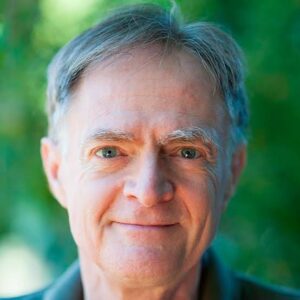
For decades, Richard stood as one of the most vital and clear-eyed environmental thinkers of our time. Heinberg was Senior Fellow at the Post Carbon Institute and the author of fourteen influential books – including “The Party’s Over”, “Powerdown”, and “Power: Limits and Prospects for Human Survival”. He appeared at least 13 times on Radio Ecoshock, starting in 2007 with a talk to the UK Soil Association in London “What Will We Eat After Oil?”. Find links to Heinberg on Radio Ecoshock at the bottom of this blog.
Heinberg rose to prominence covering Peak Oil and energy. Fracking derailed everyone’s oil calculations, but Richard continued to document shortfalls of the fossil energy paradigm. More important, he helped lead a movement toward resiliency and local power. Richard warned endless growth promised by politicians was impossible on a limited planet. In 2016 he discussed his book “Our Renewable Future: Laying the Path for One Hundred Percent Clean Energy”. You can find a full catalog of Richard Heinberg’s recordings on Radio Ecoshock in this week’s blog. I believe his last appearance on YouTube was April 20, 2026 “#19 Energy, Ecology, and the Limits of Industrial Civilization – with Richard Heinberg” with Sebastian Dienst.
Richard’s even voice was everywhere, in books, videos, podcasts. movies, and countless speeches, community forums, the lot. Richard Heinberg’s influence on the new future should become more important in coming decades. He challenged us to face uncomfortable truths about fossil fuel dependence, resource depletion, and economic growth. Richard never asked us to collapse into despair. Instead, he called on us to build real human resilience, to cherish local community, and to learn how to live well within Earth’s natural boundaries.
Beyond books and lectures, Richard was a man of quiet artistic warmth. He was an accomplished violinist, an illustrator, a gardener, and a teacher . Though his voice has fallen silent, he leaves his vision – to speak the truth with courage, care for one another, and work together toward a sustainable, resilient future.
Thank you Richard, for all you gave us.
You can find a catalog or Richard Heinberg appearances on Radio Ecoshock at the bottom of this blog.
===========================
THE CLIMATE COST OF WAR (replay)
PATRICK BIGGER
Another “biggest ever” rain of destruction is falling on Iranians. Everyone in the Gulf States is getting their share of ballistic missiles and fear. Pulling back to the climate big picture, awful news could have a necessary twist. When the Gulf countries and Russia can barely get any oil out, it seems “demand destruction” is coming for us all. That means high gas prices for some, out of business for others, out of food coming soon in poorer countries.
They told us renewable power was “unreliable”. Now we see oil and gas is unreliable, totally unreliable. Solar and wind is cheaper anyway. Planned descent from fossil fuels would have been kinder, but could the dark times trigger a renewables revolution?

As the bombs blow, this is a good time to reply my earlier investigation into the climate costs of war. Dr. Patrick Bigger. Patrick is Research Director at the Climate and Community Institute based in Philadelphia. He co-authored the report “Confronting Military Greenhouse Gas Emissions” (free .pdf here).
Listen to or download this 20 minute interview with Patrick Bigger in CD Quality
========================
CHOKING IN WILDFIRE SMOKE
RITA HOSKING
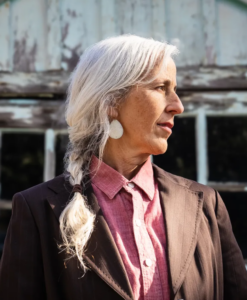
Damn, it’s a crackling smoke storm outside. I guess this is the new climate country. From the Pacific Northwest, this is Rita Hosking with “Smokey” from her album Climate Country Radio. Find her at ritahosking.com. My thanks to Pam from KBFG Seattle for sending that.
===========================
CAN STRESS BE ANY WORSE?
Can things get any darker? The stock market is shaky, the economy is a casino, carrying our jobs and our kids along for the ride. War sucks all our money away. The warming proceeds. Why is your Prime Minister, and your President doubling down on more pipelines, more drilling, more climate damage? One theory: we are locked in a battle of competitive collapse, a kind of mutually assured destruction.
Nobody “wins” this competition. Short-term economic gains will be eventually erased by exponential costs of climate disasters. We have to bail out of fossil world now – before a synchronized collapse of interconnected global systems. It is late, but I believe not too late. We can at least save a livable future for coming generations. We can. We must. Make a future we can trust.
I’m Alex Smith. Thank you for listening, and caring about our world.
=================
RICHARD HEINBERG ON RADIO ECOSHOCK
– A CATALOG
Here is a list of recordings of Richard Heinberg on Radio Ecoshock – 13 appearances from 2007 to 2023.
2007
What Will We Eat After Oil? Richard Heinberg to Soil Association, London, 071122. Essential listening from author of “Party’s Over” and “Peak Everything”. 56 min. Remastered to fix original recording flaws. CD Quality 52 MB or Lo-Fi 13 MB
============
2009
The Future: Dark or Resilient?
Posted on November 5, 2009
Buckle up for a new Radio Ecoshock interview with Richard Heinberg, famous Peak Oiler, author of “The Party’s Over”, “Powerdown” and now his latest “Blackout: Coal, Climate, and the Last Energy Crisis.”
I followed some of Heinberg’s research in the regular issues of his newsletter, called the “Museletter”.
==================
2011
Radio Ecoshock Show – Fracking Myths & Climate Capitalism
by Alex Smith Publication date 2011-05-19
===============
RICHARD HEINBERG: THE END OF GROWTH
From his new book, Richard Heinberg on “peak food”, “resilience circles”, and whether money can survive in an economy without growth. Acknowledging the new reality on a resource-limited planet, with Senior Fellow at the Post Carbon Institute. From Radio Ecoshock 110907 16 minutes CD Quality 8 MB
==============
2013
Why Is the Economy Shrinking? – Richard Heinberg Posted on January 15, 2013
Endless growth is a delusion with consequences…The spiral of climate change, peak energy, and economic crisis, with author Richard Heinberg. Fresh interview on giant new book “Energy: Overdevelopment and the Delusion of Endless Growth”.
==============
Power Down or Power Shift? – Posted on October 2, 2013
Did fracking kill off Peak Oil? Or just the world’s hope of alternative energy? Coming up, energy guru Richard Heinberg on his new book “Snake oil, How Fracking’s False Promise of Plenty Imperils Our Future.”
RADIO ECOSHOCK YOUTUBE WITH RICHARD HEINBERG
Richard Heinberg – Part 1 Energy and the Delusion of Endless Growth January 18, 2013
Richard Heinberg – Part 2 Energy and the Delusion of Endless Growth
============
2015
Feed Yourself – Posted on April 8, 2015, by Radio Ecoshock – Oil guru Richard Heinberg on life after fossil fuels.
==================
2016
For Better or For Worse – Posted on June 29, 2016
Author Richard Heinberg on new book “Our Renewable Future: Laying the Path for One Hundred Percent Clean Energy”.
===================
2020
Famine Follows Pandemic – Posted on May 6, 2020
California author Richard Heinberg works through the fragile food chain and resilient action.
==================
2021
EXTREME: We Just Left the Old Climate Behind – Posted on December 8, 2021
Richard Heinberg talks us through high prices, the fragile energy market, and his new book “Power: Limits and Prospects for Human Survival”.
====================
2023
Why Normal Is Never Coming Back – Posted on March 22, 2023,
Richard Heinberg says “The renewable energy transition is failing”. Is he giving up? Should we give up?