Breaking new science on deadly heat wave in Europe and flash floods in America. Confirmed: it is climate change. Alex reports, clip of Grantham UK scientists. UCLA expert on extreme rains and flash floods – Jesse Norris from 2022. Journalist Ross Gelbspan warned us all about fossil fuel takeover and media complicity – in 2006!
When flash floods or record-breaking heat assault and astound us – scientists used to say individual events could not be attributed to climate change, only trends. That is over. Our pollution of the atmosphere is creating disasters outside human experience. In Western Europe, new deadly heat is killing thousands of people. You all heard about deadly flash floods in Texas, New Mexico and North Carolina in a single week. Then New York and New Jersey received 2 inches of rain in one hour – only the second time on record. Already scientists lay out the facts: extreme disasters have increased many times over since just 1990. This IS a new world.
Listen to or download this Radio Ecoshock show in CD Quality (57 MB) or LoFi (14 MB)
Listen to or download the show theme song “Down by the River” (Lyrics Alex Smith, AI music, Creative Commons license, free for any non-profit use) in either Blues …
or this Rock version (my preference) …
IF YOU LIVE IN EUROPE, NOW YOU KNOW HEAT
Let’s start with Europe. Unless you live in France, Spain, Germany or the UK, you don’t know. Heat from the end of June to early July was brutal. A massive heat dome sat over the continent. Sea surface temperatures in the Western Mediterranean surged up to 6 degrees C above normal for this time of year. That ocean heat wave alone is bizarre and frightening. It seems impossible and we don’t know what it means, or what the impacts might be on sea life or weather .
Researchers from the Grantham Institute found:
“Human-caused climate change intensified the recent European heatwave and increased the number of heat deaths by about 1,500 in 12 European cities.
Focusing on ten days of heat from June 23 to July 2, the researchers estimated the death toll using peer-reviewed methods and found climate change nearly tripled the number of heat-related deaths, with fossil fuel use having increased heatwave temperatures up to 4°C across the cities.
They warn that heatwave temperatures will keep rising and future death tolls are likely to be higher, until the world largely stops burning oil, gas and coal and reaches net zero emissions.
It is the first rapid study to estimate the number of deaths linked to climate change for a heatwave and was led by scientists at Imperial College London and the London School of Hygiene & Tropical Medicine.”
That was from a press summary by Imperial College London. Let me just add: these are not fringe scientists looking for a career bump. Grantham Institute and co-authors are among the top in their field. They tend to be conservative and scientifically cautious.
The study is titled ”Climate change tripled heat-related deaths in early summer European heatwave”, July 2025. In the show, we hear a couple of minutes from two study authors: Garyfallos Konstantinoudis and then Friederike Otto.
————————–
TRANSCRIPTION OF VIDEO FROM GRANTHAM
Garyfallos Konstantinoudis
“In late June and early this month, a heat wave brought extreme temperatures to Europe. Our study published today estimates that climate change tripled the expected death toll. It focused on ten days of heat experienced by 12 cities from June 23 to July 2. Our study estimates that there would have been about twenty three hundred heat related deaths across the cities with fifteen hundred of them caused by the climate change driven heat. This means that climate change is behind sixty five percent of the excess deaths.

Our results reflect how heat deaths can increase rapidly when temperatures reach certain thresholds that push vulnerable population to their limits, particularly older people with underlying health conditions like heart disease, diabetes, and respiratory problem. An increasing heat wave temperature of just two to four degrees can mean the difference between life and death for thousand of people.
Heatwaves don’t leave a trail of destruction like wildfires or storms. This is why heatwaves are known as silent killers. Most heat related deaths occur in homes and hospitals out of public view and are rarely reported. Our study is only a snapshot of the true death toll linked to climate change driven temperatures across Europe, which might have reached into the tens of thousands.”
00:01:20 [Speaker 2 – Friederike Otto]
“This analysis is a hugely important development for the field. Since the early two thousands, dozens of attribution studies have shown how heat waves are getting hotter with climate change, studies have estimated heat related death caused by climate change. Ours is the first ever to do it rapidly in near real time.

The only way to avoid more intense heat waves is to stop burning oil, gas, and coal. Shifting from fossil fuels to renewable energy will lower emissions that heat the climate and intensify heat waves. We also need to make our cities resilient to high temperatures. Long term strategies, such as expanding green and blue spaces are needed. Short term measures like cooling centers and formal support systems for vulnerable populations will also help save lives now.”
Check out this Channel 4 interview with Julia King and Michael Mann. Presenter Cathy Newman says
“To gauge the immediate effects of higher temperatures, scientists have just calculated that an extra 263 Londoners are likely to have died in the recent heatwave. With another one predicted for five days from tomorrow in the south east, there are calls for more to be done to keep vulnerable people cooler.”
—————————-
This is not a small thing.
According to the UN World Health Organization or WHO’s Regional Director Dr. Hans Kluge, “A staggering 175,000 people die from heat-related causes every year in Europe and that figure is set to soar in line with our steadily warming planet.” That is more than eight times the number of people killed in road traffic accidents across the EU.
Obviously more Europeans will want to save their lives from new extreme heat. Many simple steps in society and government can help. After catastrophic loss of life in a 2003 heat wave, France took steps that somewhat reduced loss of life. This may include checking on neighbors and shut-ins, cooling centers for the homeless and poor, public education, planting street trees and so on.
But now, as leave climate action too late. It’s not enough. Northern European buildings were constructed to retain heat, in the winter, not dissipate heat in summer. There needs to be long expensive programs of insulating old homes and public buildings to Net Zero standards – for survival.
A WAVE OF EUROPEAN AIR-CONDITIONING?
That is not enough, and not soon enough. Hundreds of millions of Europeans will install air conditioners or heat pumps. The AC debate is raging in Europe these days. Millions of air-conditioners blast even hotter air into the streets. They create a new summer electricity demand that may increase old energy plants which makes global warming worse. Can Europe race to power life-saving cooling with green energy? Or will they accept hundreds of thousands dying each year, counting heat like the new Plague? Assuming the poor are left to last, could a heat wave lead to revolution or civil war? The unknowns multiply with each tenth of a degree heating.
Stranger still, if technology provides a fix for survival at 4 degrees C hotter in European cities, and fewer people die, the immediate problem of climate change seems solved. Getting off fossil fuels seems less likely, and will be proclaimed “dangerous”. A new report from the formerly staid U.S. Department of Energy pushes to keep coal plants operating and new fossil power to cope with rising electricity demand. The DOE has been visibly taken over by the fossil fuel lobby. Don’t be fooled. Some American government institutions, even scientific ones, are being re-issued as propaganda tools. Sad.
WHAT ABOUT FLASH FLOODS?
UK scientists rapidly determined recent European heat was made worse and more likely by excess greenhouse gases. What about the flash floods that captivated American news channels? In the first week of July 2025, there were flash floods in Kerrville, Texas; Ruidoso, New Mexico; Chapel Hill, North Carolina, and Chicago.
CHAPEL HILL
In Chapel hill, well inland from the Atlantic coast, responders rescued people from shopping malls and roads. The Haw River reached a new record up 32.5 feet, while the Eno River went up 25 feet. As in New Mexico and Texas, the speed of river cresting was astonishing. A wall of water and debris came downstream before warnings. But no one was killed. The Chapel Hill floods were attributed to remnants of Tropical Storm Chantal.
RUIDOSO NEW MEXICO
In the remote mountain town of Ruidoso, there was a double climate connection. They got a super-rain flash flood event. We’ll get to that. but according to the Washington Post:
“The flooding was triggered by approximately 3.5 inches of rain falling on a burn scar in about a 90-minute period, pushing water directly into the community, the mayor said. The burn scar was the result of wildfires that ravaged thousands of acres in the area last year, including the South Fork Fire.”
– Washington Post, July 10, 2025 (paywall)
Ruidoso New Mexico is between Albuquerque and Ciudad Juarez Mexico. 2023 was a year of extreme wildfires burning through New Mexico, during one of it’s longest heat/drought waves ever. but the Rio Ruidoso area was burned by the South Fork and Salt fires in 2024. Hundreds of homes were lost.
Radio Ecoshock has covered the extensive links between climate change and increasing extreme wildfires in at least a dozen shows. I’ll link to a few of those interviews with scientists in my show blog, at ecoshock.org.
So Ruidoso suffered a compound climate event: wildfire scars followed by a flash flood. That is how climate change works.
KERRVILLE TEXAS
In June 2022, Jonathan Gourley from NOAA National Severe Storms Laboratory. co-authored a paper about U.S. floods. The Open Access paper is called “Spatiotemporal Characteristics of US Floods: Current Status and Forecast Under a Future Warmer Climate”.
They found overall flood frequency increases 100% covering 44% more area with “more random and unpredictable events throughout the year.” That sounds as serious as sea level rise and the heat waves. I replay later in this show.
But let’s get to hundreds dead along the the Guadalupe River on the Fourth of July. What an awful mess this is. As in Chapel Hill and Ruidoso, stunning videos show a river that became a land tsunami in minutes. During the night, ten inches of rainfall fell in the Kerrville region. The quiet Guadalupe River rose 29 feet in 45 minutes.
The Houston Chronicle, July 9, ran this story by Rebekan F. Ward: “Climate change worsened rainfall that triggered Camp Mystic floods: ‘Like steroids for the weather’”.
Texas climate scientists like Andrew Dessler pointed immediately to climate change. That is courage in the current anti-climate, anti-science environment in America these days. He will get a chorus of criticism, and possibly death threats. Three European scientists released a fast report. Their title is “Heavy rain in July 2025 Texas floods locally intensified by human-driven climate change”. Lead Author is Davide Faranda, from the French national center for scientific research. Co-authors are from Oxford and INGV Italy.
There was no heat wave in Central Texas on July 4th. Temperatures were below average. While this scientific team finds natural climate variability is a factor, the speed and magnitude of this flash flood could not have happened without a warmer atmosphere. In scientific language: “Natural variability alone cannot explain the changes in precipitation associated with this very exceptional meteorological condition.”
Yes it was climate change, no matter what the Governor or the President says.
GLOBAL THREAT OF FLASH FLOODS
Mind-bending flash floods are appearing in many parts of the world in the last three years especially. They wash through old European cities and recently hit parts of Russia. China experienced epic flash floods this year and last. Australia had unbelievable downpours in hours. This is a global threat.
UK TOO
A paper published in March 2021, led by Nikolaos Christidis, said this about the United Kingdom’s prospects:
”Compared to a hypothetical natural climate, we estimate a 10-fold increase in the chances of such extreme rainfall events in the United Kingdom by the end of this century, which underlines the need for effective adaptation planning.”
I’m going to draw on reporting from environmental journalist Stephen Leahy, in his “Need to Know” substack.
“Record-high 24-hour rainfall extremes occurred 52% more often in 2024 than during 1995–2005, according to the 2024 Global Water Monitor Report.”
“Recall last year’s devastating flash floods in Valencia, Spain?
Over 770 millimeters (30 inches) of rain in just a few hours. It was Spain’s worst weather disaster, claiming 232 lives and totaling €18 billion in damages, with 11,242 homes destroyed and 120,000 vehicles written off.”
“It also turns out that hotter ground temperatures lead to stronger updrafts of water-laden air masses. These then cool down faster, resulting in heavier rainfall, according to a new study in the journal Nature. This has led to a 15% increase in torrential rainfall events lasting only a few hours, as well as an increase in flash flooding.
“The temperature increase caused by climate change leads to more intense precipitation locally”, the study concluded.”
Thank you Stephen Leahy at substack for digging into all this.
We all need to learn about this new flash flood phenomenon. Stephen points to new science published in the Journal Nature in March 2025. The title is “Increasing hourly heavy rainfall in Austria reflected in flood changes”. This is the smoking gun, but as always with Earth systems, there is a twist. The Austrian weather stations reported a 15% increase in hourly heavy rainfall over the last four decades. Most of this is from higher water-holding capacity of a warmer atmosphere. But daily figures for heavy rainfall, the longer lasting variety, depend more on atmospheric changes due to warming. The results warn small rivers may be more dangerous than large ones.
Here is a quote from the Abstract of that 2025 paper:
[They find] “... a bigger role of atmospheric circulation modes than previously thought. The daily heavy rainfall changes are remarkably consistent with observed flood increases of about 8% in large catchments. The hourly heavy rainfall changes are similarly consistent with flood changes in small catchments, although the flood increase is stronger (25% over the last four decades). Climate adaptation measures in flood management may therefore be more pressing for rivers draining smaller catchment areas than for large rivers.”
I hope emergency planners are listening, as well as listeners who consider themselves safe beside smaller rivers or streams. Maybe don’t put your house or tent or RV down by the river in this brave new climate.
Again, bolstering weather services, better emergency warning like sirens, and rules about building and camping can save lots of lives. We tend to only pay attention to deaths, so that may hide the growing problem for a while. Until it gets worse.
Also strange, some developed countries, especially those that dismantle science and public policy, or consider themselves masters of nature, are lagging behind poorer countries. Following mass deaths during tsunami’s and tropical typhoons, both India and Bangladesh greatly improved public policy to protect lives. For example, Bangladesh built shelters along the coast that resist extreme winds and high water. The Indian Army has evacuated a million people with countless trucks before a typhoon hits.
Why are Europeans and Americans so blind-sided by heat waves and flash floods? There must be psychological, social and cultural barriers to recognizing climate change. Those who pollute the most excuse themselves from the scene – until the dragon comes.
EXTREME RAIN
JESSE NORRIS
The U.S. recorded more than 700 flood alerts already in 2025 – way above normal. From hundreds dead in Texas to New York subway floods (2 inches of rain fell in one hour there) – fast floods are becoming the new normal in many parts of the world. Some of the rest, like the UK, are in drought. Mal-distribution of water is part of climate change.
On Saturday 21st of August 2021, an impossible 17 inches of rain – 43 centimeters – fell on Waverly Tennessee, a little town West of Nashville. More than 20 men, women and children were killed in a surprise rush of water. Years later the area has still not fully recovered.
In Europe mid-July 2021, record-busting rains brought floods killing at least 165 people in Germany, and 31 in Belgium. Extreme precipitation events are popping up all over the world. Could it happen where you are, and is it climate change?

At the University of California Los Angeles, Dr. Jesse Norris specializes in these small scale but large impact weather events. Educated in the UK at the University of Manchester, Norris is a Post Doctoral researcher at UCLA and co-author of timely new science answering many of our questions.
Listen to or download this 28 minute interview with expert Jesse Norris in CD Quality or Lo-Fi
Find more info and links about extreme rains with Jesse Norris in this show.
SEE ALSO: “Anthropogenic influence on extreme precipitation over global land areas seen in multiple observational datasets” July 6, 2021 in Nature (open access).
============================
“STRADDLING BETWEEN SOLUTIONS AND SURVIVALISM”
ROSS GELBSPAN – Transcript
You are listening to EcoShock Radio for the world. Replay from Ecoshock Feb. 2006.
[Ross Gelbspan]
The White House has become the East Coast branch office of Exxon/Mobil and Peabody Coal, and and climate change has become the preeminent case study of the contamination of our political process by money.
[Alex Smith]
For thirty one years, the late Ross Gelbspan was an investigative reporter and editor for the Philadelphia Bulletin, the Washington Post, and the Boston Globe. His work led to a Pulitzer Prize. Retiring in 1998, he wrote the book “The Heat is On, The Climate Crisis, The Cover Up, The Prescription”. President Clinton read it.
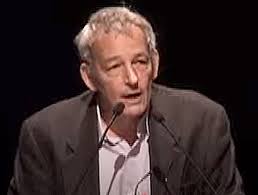
His 2004 book is “Boiling Point” – was reviewed in the New York Times by Al Gore. Gelbspan has appeared at the World Economic Forum and regularly in the largest American media. In this show, you hear excepts from his speech organized by Mark Breslow of the Mass Climate Action Network. The topic is “Straddling Between Solutions And Survivalism”.
[This program features select clips from Ross’s talk. You can find the full transcript archived here. I wonder if Radio Ecoshock has the only remaining audio for this event?
Getting published on global warming has been a challenge for even top-named reporters like Ross Gelbspan. He explains the huge gulf in media and public awareness between America and other parts of the world, particularly Europe. Other governments and publics have long recognized the dangers of climate change.
This barrier to information in America has become a fixation for Gelbspan. He took a lead in exposing the corruption of the public mind, oiled by millions in propaganda dollars from the fossil fuel industry. He says the major media outlets are blinkered, seeing politics and everything, so they fail to cover issues outside the political sphere, like science, for example. Facts are not political.
Ross Gelbspan:
The White House has become the East Coast branch office of ExxonMobil and Peabody Coal, and climate change has become the preeminent case study of the contamination of our political process by money.
This fusion of corporate interest and government power has proved an almost insurmountable obstacle to the climate movements ability to get its larger message across.
So I think a really critical focus for climate activists should be on the press, and I know from my own experience that when the press covers an issue thoroughly and consistently, the public responds, laws get passed, I think in this case it would mobilize the public in six months.
Unfortunately, the industry public relations specialists have been so successful in promoting equivocal and confusing climate coverage, that the American public is about ten years behind the rest of the world in this area. There are a number of reasons for this, none of them really justifiable.
Let me just go through one of scores of these reasons for why the press behaves the way it does. One reason I think is the fact that the career path at the top of news outlets normally follows, lies in following the track of political reporting. Top editors tend to see all issues through a political lens.
Early in his administration, and this is one example, President Bush declared he would not accept the findings of the IPCC because they represent foreign science, even though half the scientists who contribute to the IPCC are American scientists. Instead, Bush called on the US National Academy of Sciences, to provide American science.
What I found astounding was this, even as the Washington press corps reported the story, not one reporter that I saw bothered to check the position of the NAS. Had they done so, they would have found that as early as 1992, three years before the IPCC declared that we are changing the climate, the NAS was pushing for strong measures to minimize the impacts of human induced global warming.
[Alex Smith]
Some of Gelbspan’s most famous reporting exposed the links between fossil fuel corporations and a handful of paid scientists who implanted the impression of a debate within science about the human role in climate change. But there was no debate in scientific journals or among thousands of experts in the field.
Gelbspan compared this effort to cloud our thinking to the public relations efforts of the tobacco lobby who found experts to deny that smoking caused cancer. History may find the Exxon and Peabody lobbyists helped kill more people than the tobacco industry as climate change unfolds in floods, heat waves, droughts, and storms.
Some have argued that the foundation of newspaper sales and television viewers is controversy and conflict. So the media simply fell into their old model to sell the fake climate controversy supplied by public relations companies and their paid hack experts.
Gelbspan, who knows the media industry as well as anyone, doesn’t let the press off so easily. He says irreparable damage has been done to the planet while valuable years were wasted in denial led by the mainstream media.
As he digs away at the black dollars that bought time forever growing and excessive profits for the fossil fuel industry, Ross finds the media as guilty as the carbon kings. Let’s listen to a few clips from his recent speech starting with the fake debate.
[Ross Gelbspan]
The next reason has to do with this campaign of disinformation launched by the coal industry and carried forward by Exxon/Mobil.
As I mentioned, the fossil fuel lobby paid a tiny handful of scientists to dismiss the reality of climate change. That campaign has had a profoundly corrosive effect on journalists by insisting this issue of climate change be cast as a debate, when in fact there is no debate whatsoever in the community of mainstream scientists.
When it’s a story involving opinion, a journalist is ethically obligated to give the major competing points of view, their best shot, their about equal space, and their most articulate presentation. But when it’s a question of fact, it’s up to a reporter to get off his or her butt and find out what the facts are. In this case, we know what the facts are.
[Alex Smith]
Reporters and editors, Gelbspan says, have broken the public trust on the environment story. Isn’t this media denial handy for all of us? Why should we make personal sacrifices or expect expensive action by government or big business if we aren’t sure about it?
The fossil fuel companies know full well that many of us wish the whole greenhouse gas problem would just float away into the sky along with our exhaust. As his speech developed, Gelbspan seems to say the public might be panicked if it knew the true extent of damage already done to the climate.
[Ross Gelbspan]
As one, co chair of the IPCC said to me, there is no debate among any statured scientists working on this issue about the larger trends of what is happening to the climate. That is something you would never know from American press coverage. But it is something you should point out to every editor and reporter you encounter as you work to get your message out.
Stop approaching reporters like beggars asking for a handout. Let them know how angry you are at them for allowing themselves to be conned into betraying their public trust.
One researcher who surveyed more than 300 peer reviewed research articles a couple of years ago found that not one questioned the, larger consensus about human induced warming. By contrast, much of the, coverage in The US continues to, cast this issue as a debate, and that’s exactly what the public relations specialist of Big Coal and Big Oil want. They don’t care who wins the debate as long as the public perceives it to be a debate.
And that way, people can shrug their shoulders and walk away and say, come back and tell us what you know when you really know what you’re talking about. To keep the issue framed as a debate allows the public to avoid confronting what can be a frightening and potentially emotionally overwhelming threat.
[Alex Smith]
Gelbspan was asked to leave the audience with a note of optimism, but he changed his title to reflect the divided feelings many in the field hold. His new title “Straddling Between Solutions And Survivalism”.
I think we’re going to need both ways to survive a very bumpy transition to a carbonless sustainable economy even while we implement the solutions that will save future generations from hell on earth. We’re gonna get some of both folks.
There is a whole course of people from net bloggers to senior scientists who are thinking about survivalism – if we can’t adapt our political and economic systems soon enough. Things may fall apart.
[Ross Gelbspan]
Because of the success of this deeply dishonest campaign of information control, we find ourselves today in a sort of schizophrenic predicament. We are torn between the promise of solutions and the impulse towards survivalism. The situation is that dire.
[Alex Smith]
Meanwhile, this seasoned journalist pleads for everyone to drop the political angle.
[Ross Gelbspan]
Climate change doesn’t care about conservatives, liberals, or even greens for that matter. Greenhouse gases operate by the laws of physics, not by the grace of campaign donations. Here is a short list of conservatives who warned about climate change.
For example, many editors view climate change as a kind of proxy issue for political liberals. That’s not the case. The earliest and very forceful advocate on this stuff was Margaret Thatcher, Britain’s conservative prime minister.
William F. Buckley has, published, serious warnings about global warming. Jim Woolsey, former CIA director, and Republican senator Richard Loughborough had a long piece in foreign affairs a couple of years ago about the need to deal with climate change. President Bush’s first treasury secretary, Paul O’Neil, has likened the coming impacts of climate change to a nuclear holocaust. And the one senator taking the lead to regulate carbon emissions is conservative senator John McCain.
It would be really useful if journalists were to spend a bit of time examining the real rather than the assumed politics of climate change.
[Alex Smith]
I rate Ross Gelbspan up there with the great early climate communicators like Al Gore, George Monbiot, and Elizabeth Kolbert.
I’m Alex Smith reporting for Radio Ecoshock.