Record-smashing winter heat in the U.S. – is not a story about America. Heat domes appeared over Europe, Russia, Canada, Iran, Japan, China, and Australia to name a few – stalled heat waves out of season and in new geography. A panel of pro journalists on the scene with CoveringClimateNow. Then Dr. Thomas Gasser takes us into the long future as nature’s greenhouse continues to emerge. Right now and then, on Radio Ecoshock.
Listen to or download this Radio Ecoshock show in CD Quality (57 MB) or Lo-Fi (14 MB)
IMPOSSIBLE HEAT IN THE WEST
“’Virtually Impossible Heat’ & the Future of the American West” – journalists connect on yet another major climate disruption.
We listen in to a media webinar hosted by David Dickson for Covering Climate Now. These are reports where summer heat breaks out in winter, smashing thousands of all-time records. Real pros of environmental journalism try to express seasons never seen before.
ZAKE LABE

Zake Labe of Climate Central begins, saying the March heat dome is remarkable and eye-opening. Summer heat is far too soon, in March, and persistent, heading into 2 weeks long, – a compound event when combined with the long dry winter in the West. This heat dome, scientist Labe says, is five times more likely than without human-caused climate change. We have the most confidence it is climate change.
Climate Central has a global tool to check on how climate is influencing where you live.
FIRE SEASON
Zack Labe finds we have a worst-case scenario. There was already a snow-drought in Oregon, Colorado, east of Rockies – before the heat arrived. This heat dome amplified the drought and made it all earlier.
A thirsty atmosphere absorbs run-off before it gets to the Colorado River. Plants are also beginning to absorb soil moisture at this time of year. Multiple factors are draining moisture from soil. It all sets the stage for wildfires. With little snow in the forests in March, high altitude fires become more likely.
JOAN MEINERS
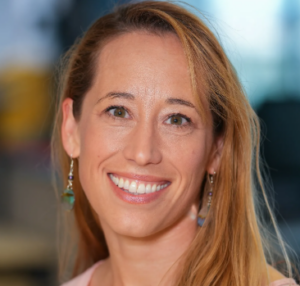
Joan Meiners is a long-standing reporter for The Arizona Republic in Phoenix, the vanguard of heat in urban centers. Caught off guard and off-season, the Phoenix cooling centers were not ready for this early heat wave – and they have a large population of unhoused people. All officials can do is advise to seek shade, drink lots of water – but no cooling shelters.
Phoenix hit the earliest 100 degree day on March 18th. “An atmosphere gone gangbusters” said one meteorologist.
SEE: “Arizona in for heat shock as temps about to top 100 earlier than ever”
Joan Meiners says this past year was terrible for skiing. It is a sign of the decline of winter. Only half of places which hosted the winter Olympics could host them again by 2050. She sees a scary, dry summer this year, recalling the July and August fires last year along the Grand Canyon, including a lodge that burned down. Part of the problem is mismanagement and fuel build-up, but also warmer temperatures and warmer overnight temperatures affect plants and moisture.
Another risk of extreme heat: more 911 calls, and as heat season gets longer, that strains the emergency system.
RACHAEL BECKER

Rachael Becker from CalMatters says it’s been really HOT in California. The Health Department is struggling to deal with an early and long-lasting heat wave. Rachel looks at snow pack and early heat wave. The Sierra Nevada is the major water reservoir for several states. However there was an average-to-good water year, so the reservoirs were topped up. But snow reserves melted fast in this early heat wave that came and stayed for weeks.
The heat wave took the snow pack down to 38 % of average and then went to 22% of average. It is too early. People and farms don’t need it now. This event is called a “snow-eater”.
Rachel Becker tells us about a conflict between containing floods and retaining water for later summer use. That is difficult to balance. They need permission from US Army Corp of Engineers to save water from the “safety space” of dams reserved for flood control.
SEE: Record heat, melting snow: What does it mean for California’s reservoirs?
Host David Dickson takes it to Colorado River and the expiring agreement between the states. Will this heat event factor into ongoing discussions? Lake Powell is 25% full, well below power needs. Lake Mead is low.
SEE: Colorado River talks hit crunch time. What’s at stake for California water?
Plus: a new study further investigated the link between a declining snowpack and more severe fires in the Western U.S.
SETH BORENSTEIN
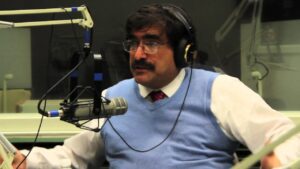
Seth Borenstein has been an environmental reporter for Associated Press for decades. When ever I find his byline there is solid journalism. Borenstein covered the 2021 heat waves in the Pacific Northwest and compared the two in an article with a weather historical expert. He says the Pacific West doesn’t get heat waves like 2021. The big climate changes show up as a matter of the calendar and the atlas: things happen at the wrong time, and in the wrong place.
Seth mentions a 2012 heat wave in central U.S., and Russian 2010 heat wave. He brings up the Hawaii floods, and connected the two events.
NEXT WEEK
Next week I will talk with one of America’s great meteorologists and storm-chaser Dr Jeff Masters. Along with weather historian Bob Henson, Jeff brings out the scope, the numbers, and the awe of the March of heat in the West, 2026. Tune in for sure.
=============================
THE LONG FUTURE – UNLOADING CARBON
THOMAS GASSER
Is this outbreak of insane war violence the new normal? If we can’t keep our greenhouse gases down to nature’s level, humanity is doomed to a continuing hot, violent future. Call that balance with Nature “Net Zero”. According to new science, we must reach that balance as little as 15 years from now. Despite what officials say, climate harm does not end there. Long-term changes like sea level rise, warming from the oceans, and disappearing ice can no longer be stopped. People will need to remove carbon from the atmosphere hundreds of years from now.
I don’t like to talk about Net Zero or the long-future – as we crash the present. But it is time to realize: we are forcing next generations to live in an extreme climate. We burden them through time with limits and demands generated literally by the exhaust of our times.

This harsh news comes from a team of scientists in Austria. Dr. Thomas Gasser is a Senior Research Scholar with the International Institute for Applied Systems Analysis. Thomas coordinates the “Earth system modeling” research team. He helped develop a new program that is more realistic to the way nature really works. Gasser is Lead Author of one new paper, and co-author of another – laying out long-future risks.
From Laxenburg Austria, we welcome Thomas Gasser back to Radio Ecoshock.
Listen to or download this 32 minute interview with Thomas Gasser in CD Quality or Lo-Fi
We last talked in 2018 about feedback from thawing Arctic Permafrost. Now Thomas and his colleagues are back with new work on the implications of long-term feedbacks.
There are two papers to consider. As the Press Release from IIASA says:
“Starting from different premises – legal responsibility and technological feasibility in one study, economic welfare optimization under uncertainty in the other – both analyses independently point to the same conclusion: limiting both immediate and delayed climate risks will likely require centuries of net-negative emissions.”
We begin with Gasser’s new paper published February 26th: “Negative emissions to mitigate Earth system risks“. Basically, we have forced natural systems (living and non-living) into such dangerous boundaries that humans will have to work out a way to keep reducing carbon in the atmosphere, for centuries. Otherwise natural things like thawing permafrost and continuing release of heat stored in the oceans – will keep heating up the planet. There are “time-lagged impacts”.
Several flaws in weak attempts to reign in atmospheric change are tackled in this Gasser-led paper. They suggest systematic failures in approaches to this problem, especially simplistic thinking about complex systems.
The authors also say despite decades of climate research, we still have a very wide range of uncertainty. Perhaps more research will narrow that down, but we know enough about the risk that we need to develop and execute strategies now. We cannot wait for perfect knowledge. So they use “decision theory” – techniques aimed at solutions in a complex moving system. The Bayesian decision analysis is one such tool.
The authors use a new combination of techniques to develop forecasts based on a lot of moving parts (but can’t include large social changes in my opinion, like collapse of a major country or global trade.)
New results show we need to get to Net Zero CO2 emissions a decade earlier than previous estimates. The latest AR6 synthesis report suggests we need Net Zero in the early 2050’s. This new paper says we need to move that up to the early 2040’s – just 14 or so years from now. That requires wrenching changes, like hearing the tires screech on the pavement as we hit the emergency brake on carbon emissions.
In addition to permafrost thaw and rising seas, oceans will keep releasing massive heat accumulated since the industrial revolution. Arctic ice will continue to shrink, reducing Earth’s albedo which then captures more solar energy. Land and ocean carbon sinks may weaken, lowering the damage threshold.
Then we cover another paper Gasser co-authored, published in January 2026. The title is “Stabilizing time-lagged climate impacts requires net-negative emissions for centuries”. Among other things, the authors found we need to get to Net Zero CO2 emissions a decade earlier than previous estimates. That could mean just 15 years to stop loading the atmosphere and try to reverse course.
Science fiction writers and long-term thinkers try to picture the world fifty, a hundred or three hundred years from now. If humanity wants a survivable climate, part of that is already determined. We are entering an age of negative emissions required to keep a climate compatible with life as we know it, including our own.
This new paper considers legal ways of controlling emissions. It starts with a July 2025 decision by the the International Court of Justice (ICJ). The Court found climate treaties impose binding obligations on States to protect the climate system. However, for now the United States, Russia, China, and India have not accepted compulsory jurisdiction of the International Court of Justice. So this climate ruling is not accepted or being enforced by the world’s largest polluters. But it sets a framework where cliimate justice could happen, if we find the will.
Saving the climate requires institutions that can endure through centuries, no matter what political or personal changes may come. This is a challenge humanity has met seldom or almost never. These are the limits we are leaving for many generations to come.
A NEW MODEL OF CLIMATE FUTURES
I don’t normally cover a lot about how climate models work. This is an important exception. The way previous systems were used may seriously mislead us about the true state of climate change, how fast it can change, and what we need to do to save ourselves and our grandchildren. Now there is the “Pathfinder” model which can include feedbacks and varying levels of uncertainty. Our guest Thomas Gasser helped develop it, and maintains the public version of it on GitHub.
It is a bit chilling to think humans will require any institution that can last centuries. We would not want a five-hundred-year Reich of anything. We know institutions can fall into corruption and even sadism. This is the conundrum of climate change: it comes from misuse of power and yet seems to require endless power stay in place. Does the climate challenge demand authoritarian rule – or just a true democracy that really works?
NEXT WEEK
Tune in next week for another vision of the new climate. Dr. Jeff Masters helps us get the facts on the great western heat dome of ’26 – and more.
But the heat was not alone. Along it’s northern boundary an outlandish amount of water tumbled from the sky flooding parts of Hawaii, and then poured in atmospheric rivers over Canada’s soggy West coast. This was a double-edged system so large we barely comprehend it. Seth Borenstein noticed it. Weather west host, meteorologist Daniel Swain watched it. And this is not the first appearance of the terrible twin weather system. Next week my friends.
I’m Alex Smith. Thank you for listening, and caring about the real world.
I was very impressed with the work of Kenneth Trenbreth that you highlighted recently. Especially the excellent article in The Conversation dated July 11 of 2023 titled “Global temperature rises in steps – here’s why we can expect a steep climb this year and next”.
He was absolutely spot-on, 2024 is in the record books as soaring well above 1.5degC above preindustrial.
I was inspired by that article to create an infographic which shows the connection between ‘super’ El Nino’s and the step-wise increase in global average temperatures:
Super El Nino Escalator to Hell:
https://drive.google.com/file/d/1ZWNorlzMc5NbbxYRaWMcoUO97nGvKGLk/
Enjoy!